

David S. Goodsell – 1st Keynote Speaker
Integrative illustration of a JCVI-syn3A minimal cell
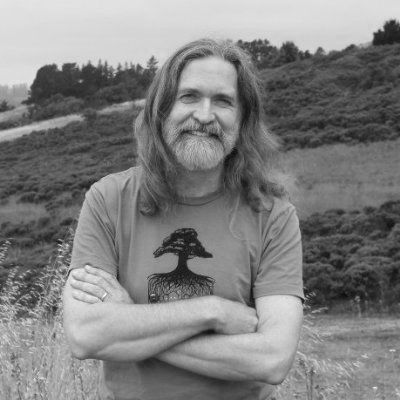
David Goodsell represents one of the very rare combinations of being a well-established scientist and artist whose publications as well as illustrations are known to a large community. David pioneered the illustration of molecular structures, played an important role in establishing the visual side of the Protein Data Bank – an indispensable Bioinformatics resource and nowadays gold standard – and pushed the boundaries over decades of bio visualization regarding proteins, molecular structures, and crowded cells.
David is Professor of Computational Biology at the Department of Integrative Structural and Computational Biology at the Scripps Research Institute and a research professor at the Center for Integrative Proteomics Research at Rutgers State University (New Jersey).
Special Issue Session
The papers of this special issue session can be found here.
Falk Schreiber & Tobias Czauderna:
Design considerations for representing systems biology information with the Systems Biology Graphical Notation
Davide Spalvieri et al.:
Design–a new way to look at old molecules
Monica Zoppè:
Colors in the representation of biological structures
Laura Garrison & Stefan Bruckner:
Considering best practices in color palettes for molecular visualizations

Daria Jelonek – 2nd Keynote Speaker
Digital Materiality & Data
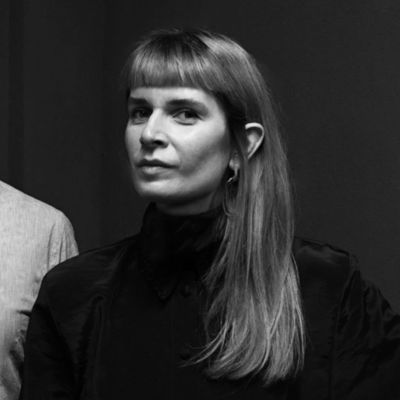
Daria Jelonek leads together with Perry-James Sugde the Studio Above&Beyond. Both of them graduated from the Royal College of Art. Their London-based studio designs exhibitions – often (live) data-driven and utilizing Augmented and/or Mixed Reality technology. They combine computational design with speculative storytelling and art for enabling improved future human interactions with the environment. They were exhibiting at renowned places in e.g. Hong Kong, Seoul, Wrocław, Milano, Berlin, and of course London.
Workshop Activity Session
This interactive session will trigger the discussion between designers and bioinformaticians to explore future steps forward. This session will be organized by designers to provide insights how a typical design and ideation process would address these underlying questions.
The interactive session will happen hybrid – activities will be delivered online as well as in-person at the RCA. The presentation of the results will happen then online during a Zoom session.